In today’s global marketplace, connecting with audiences across borders is easier than ever. But as brands expand internationally—or even across diverse linguistic communities within the U.S.—they quickly discover that translation alone isn’t enough.
To reach customers authentically and rank higher on search engines in every target region, brands need SEO localization.
So, what is SEO localization, and why is it critical for your business success? This in-depth guide breaks it all down, covering its meaning, importance, benefits, implementation strategies, challenges, and real-world best practices—specifically tailored for U.S. businesses.
1. Understanding What SEO Localization Really Means
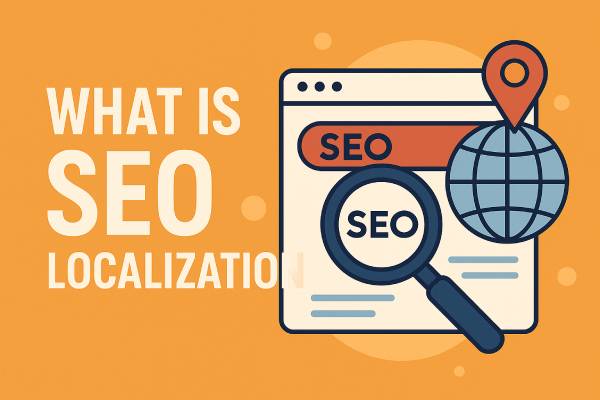
At its core, SEO localization is the process of adapting a website’s content and SEO strategy to fit the linguistic, cultural, and search preferences of a specific audience or region.
Unlike translation, which merely converts words from one language to another, localization focuses on making your content feel native. It’s about understanding how people in that region search, what words they use, and what kind of information or tone resonates with them.
For instance, a British company selling sneakers might use the term “trainers.” But if the same product is marketed in the U.S., “sneakers” or “running shoes” would make far more sense—and perform better in U.S. Google searches.
That’s SEO localization in action: aligning your digital presence with how your audience thinks, speaks, and searches.
2. Why SEO Localization Matters (Especially in the U.S.)
2.1 Connect with Local Audiences
Language is more than words—it’s emotion, tone, and identity. When a website speaks in the language, style, and references familiar to local audiences, it instantly builds trust.
For U.S. audiences, this might mean:
- Using American English spelling (“color” vs. “colour”)
- Displaying prices in USD
- Referencing American holidays, pop culture, or examples
- Using local units of measurement (miles, pounds, Fahrenheit)
Even small adjustments like these create a sense of connection that machine translation cannot replicate.
2.2 Improve Search Visibility
SEO localization ensures your content is optimized for how people in specific regions search.
Someone in the U.S. might type:
- “Best dentist in Albuquerque”
- “Affordable SEO services in New York”
- “Buy sneakers online USA”
By researching and using keywords that reflect local phrasing and intent, businesses can appear in those relevant, high-converting searches.
2.3 Enhance User Experience
When users land on a site that feels tailored to them—language, visuals, and even humor—they stay longer and engage more.
Search engines notice this engagement, which can lead to higher rankings and improved visibility.
2.4 Drive Conversions & Revenue
Localized websites perform better because they align with users’ expectations. According to studies, customers are 70% more likely to buy a product when the information is in their native language and reflects their local needs.
2.5 Stay Competitive
Many businesses expand globally without adapting their SEO strategy. This creates an opportunity for those who do localize to dominate search results in their target regions. In competitive U.S. markets, being locally optimized can make or break success.
3. SEO Localization vs. SEO Translation
These two terms are often confused, but they serve different purposes.
| Aspect | SEO Translation | SEO Localization |
| Definition | Translating text from one language to another | Adapting content to local language, culture, and search behavior |
| Goal | Maintain meaning | Ensure cultural, linguistic, and SEO relevance |
| Keyword Use | Directly translated | Researched for each market |
| Tone & Style | Often literal | Tailored for local tone and context |
| Technical SEO | May not include technical adjustments | Includes hreflang tags, URLs, metadata localization |
Example:
A translated title may read: “How to Choose the Best Car Insurance.”
A localized title for the U.S. could become: “How to Choose the Best Car Insurance in America (2025 Guide).”
The second example not only sounds natural but also includes a keyword and context that resonate with an American audience.
4. Key Elements of an SEO Localization Strategy
Creating a localized SEO plan requires a mix of linguistic adaptation, cultural awareness, and technical precision. Let’s look at each component in detail.
4.1 Localized Keyword Research
Every market has its own search habits.
For example:
- A British user might search for “cheap holiday packages.”
- A U.S. user would search for “affordable vacation deals.”
Keyword localization ensures your website matches those habits.
Steps to do it effectively:
- Use tools like Google Keyword Planner, SEMrush, or Ahrefs with the target location set to the U.S.
- Look for long-tail keywords and regional modifiers (e.g., “in Los Angeles,” “near me”).
- Include colloquial terms people actually use in your target market.
- Pay attention to search intent — informational, navigational, or transactional.
Localized keyword mapping ensures that every piece of content connects with the real search patterns of your target region.
4.2 Content Localization
Localized content is not just translated—it’s rewritten to match local context.
Here’s how:
- Adjust tone: Use a friendly, conversational style for U.S. readers.
- Incorporate local culture: Mention U.S. cities, events, or case studies.
- Adapt examples: Replace global examples with relatable U.S. references.
- Update visuals: Use images featuring U.S. settings, people, or landmarks.
- Modify numbers: Change currencies, date formats, and measurement units.
For example, if your original blog discusses “European delivery times,” modify it for a U.S. audience to “nationwide shipping within 3–5 business days.”
4.3 Technical SEO Localization
SEO localization isn’t just about content—it’s also technical. Here’s what to focus on:
- URL Structure: Use subdirectories like example.com/us/ for each localized version.
- Hreflang Tags: Tell search engines which language/region each version targets.
- Meta Tags & Descriptions: Translate and localize all titles and meta descriptions.
- Schema Markup: Add structured data with address Locality, region, and language attributes.
- Canonical Tags: Avoid duplicate content issues by setting the correct canonical URLs.
- Server Location: Host your site in or near your target region for faster load times.
These elements ensure that search engines understand your localization setup and rank your pages accordingly.
4.4 Localized Link Building
Localized backlinks are powerful indicators of authority in specific markets.
Effective methods include:
- Guest blogging on regionally popular U.S. websites.
- Listing your business in local directories or industry-specific portals.
- Collaborating with U.S. influencers or local media.
- Creating localized PR campaigns targeting U.S. audiences.
When high-quality U.S. sites link to your localized pages, your relevance in that region increases significantly.
4.5 Visual & Multimedia Localization
Don’t forget imagery, videos, and infographics.
Visual cues like currency symbols, flags, and familiar cultural scenes help users immediately identify content as “for them.”
For example, showing New York’s skyline or an American shopping mall instantly tells U.S. users they’re in the right place.
Add localized captions, alt text, and filenames for images to strengthen on-page SEO further.
5. Implementing SEO Localization: Step-by-Step for U.S. Businesses
Here’s how companies can execute localization effectively:
Step 1: Identify Target Regions
Decide which U.S. regions or audiences you’re targeting—national, state-level, or bilingual communities like Spanish-speaking Americans.
Step 2: Conduct Regional Keyword Research
Use tools to find top-performing U.S. search terms.
Example: Instead of targeting “global SEO services,” optimize for “SEO services in the USA.”
Step 3: Localize All On-Page Elements
From titles and headers to URLs and meta tags, include localized keywords naturally.
Step 4: Adapt Technical SEO
Add hreflang tags, optimize for mobile, and ensure fast site speeds for U.S. visitors.
Step 5: Build Local Authority
Earn backlinks from local media outlets, business directories, and niche blogs.
Step 6: Monitor, Measure, and Improve
Use Google Analytics and Google Search Console to track U.S.-specific traffic, ranking improvements, and engagement metrics.
6. Measuring the Success of SEO Localization
How can you tell if your localization strategy is working? Here’s what to track:
- Organic Traffic by Locale – Are U.S. visitors increasing?
- Keyword Rankings – Are localized terms performing better?
- Engagement Metrics – Lower bounce rate, longer session duration.
- Conversion Rates – Are more U.S. users taking action (purchases, sign-ups)?
- Backlink Growth – More regional mentions or citations.
- Revenue Growth – Direct or assisted conversions from localized pages.
By analyzing these KPIs, you can refine your localization efforts for better ROI.
7. Common Mistakes in SEO Localization
Even experienced marketers can stumble when localizing for SEO.
Here are pitfalls to avoid:
- Literal Translation: Words may make sense, but meaning and tone are lost.
- Ignoring Keyword Differences: Translated keywords may have low or no search volume locally.
- Skipping Metadata: Forgetting to localize titles and meta descriptions reduces click-through rates.
- Technical Misconfigurations: Missing hreflang tags or wrong URL structures confuse search engines.
- One-Time Effort: Localization isn’t a “set it and forget it” task. Markets and trends evolve.
- No Native Review: Always have a native speaker or local SEO expert review content for authenticity.
8. Real-World Example: SEO Localization in the U.S.
Consider an eCommerce brand selling beauty products worldwide.
When expanding into the U.S., they localized by:
- Replacing “cosmetics” with “makeup products” (a more popular U.S. term).
- Changing prices to USD and adding free U.S. shipping offers.
- Featuring American influencers and customer reviews.
- Using local SEO tactics like “Buy makeup online in California.”
Within 3 months, their U.S. organic traffic grew by 80%, and conversions rose by 45%.
9. Future of SEO Localization in the U.S.
As search engines become more advanced, localization will go beyond text.
Voice search, AI personalization, and regional SERP variations will push brands to be even more precise in their localization strategies.
Emerging trends include:
- Voice Search Optimization for U.S. English and Spanish phrases.
- AI-Powered Content Adaptation that automatically adjusts tone and examples for different locales.
- Hyperlocal SEO — optimizing not just by country, but by state, city, or neighborhood.
The brands that embrace these trends early will lead in search performance and customer loyalty.
10. Final Thoughts
SEO localization is more than a marketing buzzword—it’s a growth strategy.
It allows businesses to speak the language of their customers, connect authentically, and dominate search results where it matters most.
For U.S. businesses (and global brands entering the U.S. market), it’s a must-have for:
- Better visibility
- Higher engagement
- Increased trust
- Greater conversions
By combining technical SEO precision with cultural understanding, companies can turn international audiences into loyal, local customers.